Personality, relationships, and sexuality in the birth chart

Summary
- In astrology, the Moon and Venus reveal core aspects of emotional life and relational style.
- The Sun and Mars represent vitality, self-awareness, ambition, and assertiveness.
- For women, the Sun and Mars also reflect significant men in their lives; for men, the Moon and Venus reflect significant women.
- These planetary influences shape both personal identity and relationship dynamics.
- Qualities seen in others may mirror parts of ourselves that are not yet fully integrated.
- Especially when planets are in the seventh house, traits may be projected onto partners rather than owned internally.
- Especially when planets are in the eighth house, sexual desires can be a force of their own, not always aligned with the other parts of the personality.
- Relationships become mirrors for self-discovery, offering growth through contrast and attraction.
Self and other: How personality and relationships intertwine in the birth chart
In every astrological birth chart, the interplay between personal identity and relationships is complex and deeply revealing. Far from offering a rigid psychological template, the chart functions more like a symbolic mirror—reflecting not only who we are but also how we navigate the terrain of intimacy, connection, and personal growth.
Four planets in particular—the Moon, Venus, the Sun, and Mars—serve as key indicators of this interplay. Though traditionally divided by gender roles in older texts, modern astrology takes a more nuanced, fluid approach, seeing each planetary influence as relevant to all individuals, regardless of gender. Still, some symbolic patterns persist in how these energies are experienced and perceived through relationships.
The Moon and Venus: Emotional intelligence and the relational self
The Moon speaks to our emotional core—how we feel, react instinctively, and respond to nurturing and safety. Venus, on the other hand, is the planet of love, beauty, and value—showing us how we relate, what we find attractive, and how we express affection.
In both men and women, these planets reflect deeply personal aspects of character. However, for men, the Moon and Venus often carry an additional symbolic weight: they may represent key women in their lives—especially their mother, daughters, and romantic partners. In this way, men's experience of feminine energy—both within themselves and in others—is filtered through these planetary lenses.
The Sun and Mars: Identity, drive, and the masculine archetype
The Sun symbolizes the center of the self—our conscious identity, life purpose, and core personality. Mars represents our drive, willpower, and the urge to act. Together, they chart a map of how we move forward in life, assert ourselves, and maintain a sense of vitality.
In women’s charts, these planets not only describe personal ambition and self-expression but also tend to symbolize important male figures—such as the father, sons, or male partners. Through interactions with these figures, women often come into deeper contact with their own Mars and Sun qualities, whether consciously or indirectly.
Projection and integration: Meeting ourselves through others
An essential psychological insight from astrology is the concept of projection—where traits we are less familiar with or less comfortable owning are instead perceived in others. This doesn’t mean the qualities aren’t part of us; rather, they haven’t yet been integrated into our conscious identity.
For example, someone with strong Mars energy might identify as assertive and action-oriented. Another person might have that same energy in their chart but experience it primarily through conflict with a partner or admiration for someone driven. In both cases, Mars is active—but in different modes of expression.
This is particularly relevant when planets fall into the seventh house—the part of the chart associated with partnerships. Planets here often signify characteristics we seek in others, not recognizing them as part of ourselves. These qualities might be difficult, beautiful, or even challenging—but their impact is undeniable. Consciously or not, we are often drawn to people who "carry" these traits for us.

Gender, the birth chart and the tension of expectations
Modern understandings of gender have opened the door to more nuanced, flexible expressions of identity. Masculine and feminine traits are no longer rigidly assigned to biological sex but seen as symbolic energies—accessible to everyone in varying degrees. In astrology, this opens up a richer, more inclusive language: Mars and the Sun are not just “male planets,” nor are Venus and the Moon solely “female.” Instead, they describe universal forces—assertion, receptivity, emotional attunement, desire for harmony—that move through all of us, regardless of gender.
And yet, despite this symbolic freedom, many people still gravitate toward clear binaries. Cultural conditioning, personal upbringing, and even unconscious psychological needs often lead us to prefer a tidy split: to associate masculinity with action and logic, femininity with emotion and nurturing. These associations can feel reassuring, offering structure in a world full of ambiguity.
However, this preference for clarity can also create internal tension. If someone doesn’t strongly identify with the traditional traits linked to their gender—or if their chart shows a blend of energies that resists easy classification—they may feel “not masculine enough” or “not feminine enough.” These doubts are rarely just about gender; they reflect a deeper conflict between inner complexity and external expectation.
Astrological chart readings can help illuminate these tensions. They offer a symbolic map that validates difference and nuance, showing where various energies are present, how they interact, and where imbalances or projections may be at play. For many, this process is profoundly liberating. It becomes possible to move beyond rigid ideals and toward a more balanced, integrative way of being—where masculine and feminine qualities can coexist, support each other, and evolve over time.
Here’s a short illustrative story that could be woven into the article to ground the abstract ideas in something more relatable. It uses a fictional but plausible example, framed in a way that highlights the symbolic and psychological themes at play:
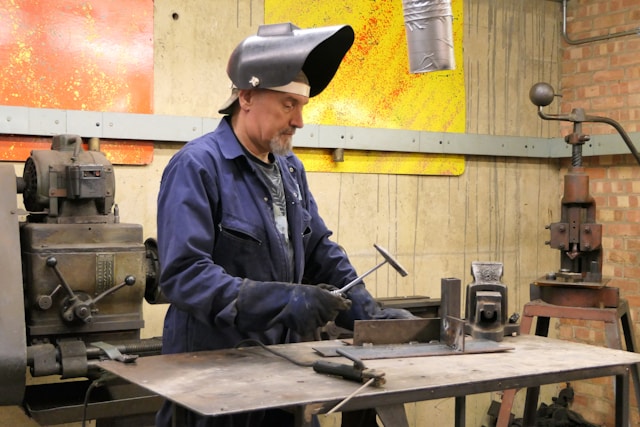
The story of Thomas
Let’s call him Thomas. A logical, technically-minded man in his forties. Outwardly, he fitted the conventional image of masculinity: calm under pressure, methodical, solution-oriented. (Capricorn Sun, Virgo rising). But when he came for a reading, he was struggling in his relationship. His partner often described him as emotionally distant, and he couldn’t understand why his thoughtful, stable presence wasn’t enough.
Looking at his chart, something stood out immediately: a prominent Moon in Pisces, tucked away in the fourth house—deeply emotional, intuitive, and sensitive. Venus was also strong, in Libra, indicating a natural aesthetic sense and a longing for relational harmony. But these planets were somewhat hidden, receiving little conscious attention. The more “masculine” Sun-Mars qualities were indeed present, but so were these quieter, more receptive traits.
As we talked, it became clear that Thomas had grown up in an environment where emotional sensitivity was gently, but persistently, discouraged. His artistic leanings as a child had been redirected into “useful” skills. In adulthood, he still felt a pull toward music and painting but dismissed these as “hobbies” rather than expressions of self.
The chart didn’t tell him who he was—but it did give him permission to explore parts of himself he’d marginalized. Recognizing the Moon and Venus as legitimate aspects of his personality—not weaknesses, but strengths of a different kind—helped him soften.
We spoke again two years later and he told me he had begun to approach his relationship differently, not by “fixing” things, but by listening more openly, allowing for emotional nuance. He even started painting again, not to produce results, but to feel connected to something internal he’d long ignored.
In this way, the birth chart became less a diagnosis and more a mirror—reflecting not just what was already clear, but what had been waiting patiently beneath the surface.

The story of Florence
Let’s call her Florence. A thoughtful, independent woman in her mid-thirties, with a background in writing and journalism. When she came in for a session, she had just ended a volatile relationship and was trying to make sense of the emotional wreckage it had left behind. "I know it was toxic," she said, "but I still miss him. It’s like some part of me is wired for this dynamic."
Her chart pointed to something powerful: Mars conjunct Saturn in the eighth house. Mars here often indicates intense, sometimes compulsive sexual energy—desire that isn’t just about pleasure, but about transformation, risk, and power. With Saturn alongside it, the dynamic becomes more rigid, more loaded with control, discipline, and—when distorted—punishment.
Florence described her ex as dominant, physically imposing, and intensely charismatic—but also emotionally cold and, at times, physically intimidating. “He said he was helping me become stronger, but really, he just wanted obedience.” She recognized that part of her had been drawn to this—fascinated by his strength, intoxicated by the sexual intensity, and perhaps unconsciously reenacting unresolved family dynamics where love and control had been tightly intertwined.
The astrology didn’t excuse what had happened, but it did give shape to something deeper: this wasn’t just a random bad relationship. Her Mars-Saturn configuration pointed to a psychological pattern—a shadow story, rooted in the eighth house’s themes of power, sexuality, and psychological merging. But importantly, it was her configuration. It was in her chart, not his.
We spoke at length about what it would mean to own this combination, rather than be swept away by it. To consciously integrate Mars as assertiveness, agency, and desire—without shame. To claim Saturn not as suppression, but as structure, boundaries, and discernment. She didn’t need to suppress her erotic intensity or pretend she wanted something “lighter.” But she could learn to direct that intensity toward people who could meet her at the same depth, without seeking to control her.
By the end of the session, Florence said something that stayed with me: “For the first time, I don’t feel doomed by my past. I feel like I’ve been handed the instruction manual.” That’s the power of a chart well understood—not as prophecy, but as a call to greater consciousness.
Relational alchemy: growth through encounter
The deeper message in all this is one of transformation. Relationships are not just about companionship or love—they're catalytic spaces for growth. When we encounter someone who embodies qualities we lack (or think we lack), we're being offered an invitation: to recognize, explore, and eventually integrate those energies into our own being.
This dynamic can be joyful or painful, smooth or disruptive—but it's always meaningful. The unconscious choices we make in partners often reflect a deep inner yearning to experience certain energies vicariously, until we're ready to own them ourselves. In this way, astrology doesn’t just describe who we are—it suggests who we are becoming.