The Nodes of the Moon – A psychological and symbolic overview
Summary
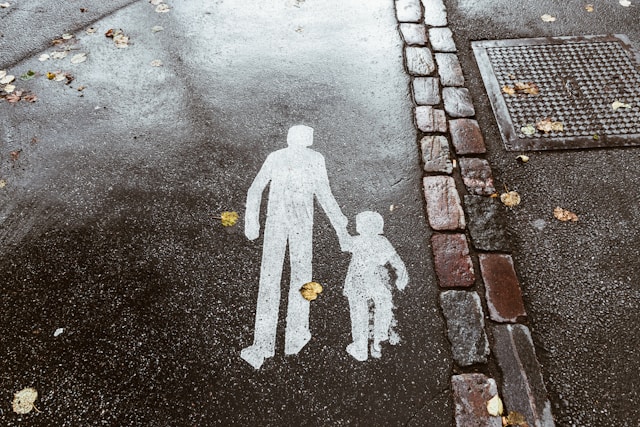
- The Nodes of the Moon, or the Lunar Nodes, symbolize a developmental tension between past patterns and future potential.
- They describe a life-long balancing act between what feels familiar and what calls for growth.
- Rather than isolated traits, the Nodes show how personal evolution unfolds in relationship to others.
- The South Node reflects inherited tendencies—useful but often over-relied upon.
- The North Node marks a zone of learning and maturity, often experienced as challenging or unfamiliar.
- This dynamic is best understood as an inner dialogue, not a fixed destiny.
- The position of the Nodes often reflects the types of people who help or hinder our development.
- Significant encounters often coincide with nodal transits or outer planet triggers.
- Subtle ideas of karma and past experience can be integrated without requiring belief in literal reincarnation.
- My own understanding of karma and reincarnation can be found in this article: The Nodes of the Moon and creative freedom.
- Understanding the Nodes offers a non-moralistic way to think about life lessons, growth, and relational development.
A subtle compass, not a cosmic command
The Nodes of the Moon are among the most psychologically rich yet frequently misunderstood symbols in astrology. They are not planets or celestial bodies, but rather two moving points in space that describe the relationship between the Sun, the Moon, and the Earth. Yet their symbolic power lies not in what they are astronomically, but in what they represent: a life-long dialogue between who we have learned to be and who we are becoming.
This article offers a grounded, non-deterministic view of the Nodes—free from spiritual overreach, but rich in psychological meaning. While a separate guide will help readers look up their individual placements, this essay lays the foundation. It explores how the Nodes describe inner tensions, relational dynamics, and the unfolding process of becoming more fully oneself.
What are the Nodes of the Moon?
The axis of movement: a symbolic tension
The Nodes always come in pairs: the North Node and the South Node. They sit opposite each other in the chart, forming an axis—a line of psychological tension and developmental polarity. Rather than labelling one end “bad” and the other “good,” it is more useful to see them as two modes of being: one that is deeply familiar, and one that is emerging.
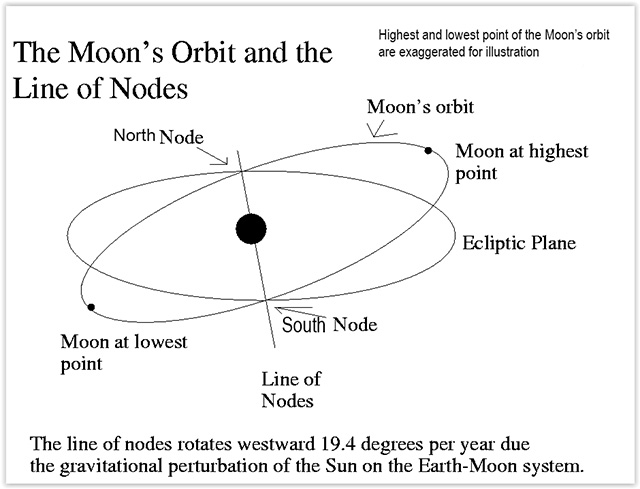
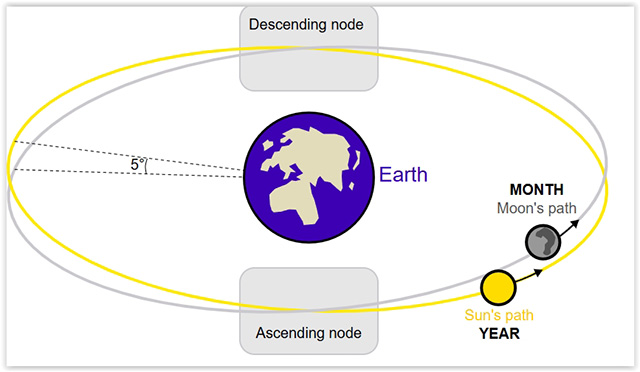
At the end of this articile you'll find two images that illustrate their astronomical background.
This axis describes a person’s movement through life, not in the sense of a linear journey toward a fixed destiny, but as a recurring pattern: of returning to what feels known, while being pulled—sometimes gently, sometimes disruptively—toward something less practiced, but more expansive.
The South Node: Familiar but limiting
The South Node symbolizes qualities, behaviours, or roles that are familiar to us. These may be deeply ingrained patterns, reinforced by early family dynamics, social conditioning, or even, as some suggest, experiences carried over from prior lives. Often, the South Node shows how we learned to survive, to succeed, or to stay safe. It reflects what we’ve done many times before.
This isn’t inherently negative. The South Node contains skills, perspectives, and strengths. But when overused or clung to too tightly, it becomes limiting. We may begin to confuse comfort with growth, or competence with wholeness. The result is a kind of inner stagnation—subtle, but persistent.
Psychologically, this can show up as recurring relational patterns, emotional default settings, or habitual self-narratives that feel secure but ultimately keep us from growing. The South Node is not a flaw to fix, but a tendency to become conscious of.
The North Node: Unfamiliar but meaningful
In contrast, the North Node points toward what is often new, uncomfortable, or underdeveloped. It reflects qualities and experiences that don’t come naturally, but that represent essential aspects of a fuller life. These are not talents waiting to be discovered, but capacities to be cultivated—slowly, awkwardly, and with intention.
The North Node does not promise immediate rewards. In fact, people often resist its direction, because it challenges their sense of identity. It may involve acting in unfamiliar ways, taking emotional risks, or engaging with others differently. But over time, the North Node reveals a deeper sense of meaning—not because it’s “better,” but because it completes the picture.
Importantly, the North Node does not ask us to abandon the South Node. Rather, it invites us to rebalance: to bring old strengths into new contexts, and to temper our reflexes with reflection. Growth, in this view, is less about reinvention than integration.
A relational model of development
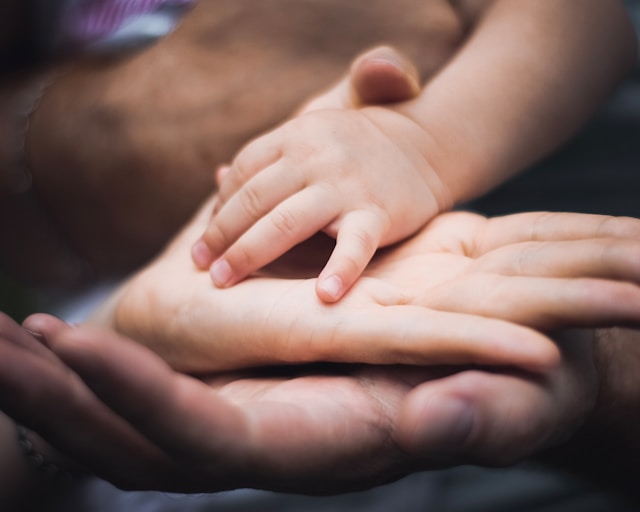
One of the most overlooked truths about the Nodes is that their meaning is not just personal—it’s relational. Our nodal themes don’t develop in isolation; they play out through connection, conflict, intimacy, and separation. What we are learning, we often learn with or because of others.
The South Node can describe the types of roles we unconsciously play in relationships—caretaker, rebel, fixer, avoidant. It can also reflect the kinds of people we are drawn to because they reinforce our familiar patterns. These connections can feel “right” at first, but often prove limiting over time.
The North Node, by contrast, tends to pull us toward new types of relational experiences. These may feel awkward or even threatening at first. They often require new forms of communication, vulnerability, or responsibility. But they also open the door to deeper forms of reciprocity, creativity, and emotional honesty.
Seen this way, the Nodes encourage us to look at our relationships not just in terms of compatibility, but in terms of development. Who helps us grow? Who keeps us small? And how do we do the same for others?
Encounters that mark us: When the Nodes point to other people
The nodal axis often reflects not only our own inner tendencies, but also the kinds of people who will be central to our development. The South Node may draw us toward those who mirror our well-worn habits—people who feel immediately familiar, but who subtly reinforce our limits. These connections are not mistakes; they serve a purpose. But they often come with a shelf life.
The North Node, by contrast, is often associated with people who challenge us. Sometimes we meet them with resistance or misunderstanding. But over time, these relationships—whether lasting or brief—can catalyse significant inner change. They stretch our perception of who we are and what we are capable of.
This is especially noticeable during nodal transits—periods when the Nodes of the moment activate sensitive points in the birth chart—or when outer planets (like Saturn, Uranus, Neptune, or Pluto) form significant aspects to the natal Nodes. These times often coincide with chance meetings, endings, or new opportunities that shift the trajectory of our life. We may not always recognize them as such in the moment, but in hindsight, they often mark turning points.
Karma, continuity, and unfinished business
While the Nodes are sometimes described in terms of past lives or karmic imprints, this need not imply a rigid metaphysical worldview. One doesn’t need to believe in reincarnation to feel that some life themes seem to carry more weight than biography alone can explain.
The Nodes offer a symbolic language for this sense of continuity. They help us understand where we might be carrying unfinished emotional business—patterns that feel inherited, stuck, or simply “ours” in a way that defies easy explanation. Whether these come from other lifetimes or simply from the early conditioning of this one, the effect is the same: a tension between repetition and growth.
Karma, in this sense, is not punishment. It is simply what continues until it is consciously worked with. The Nodes give us a framework for doing that work—not through judgment, but through awareness.
Development, not destiny
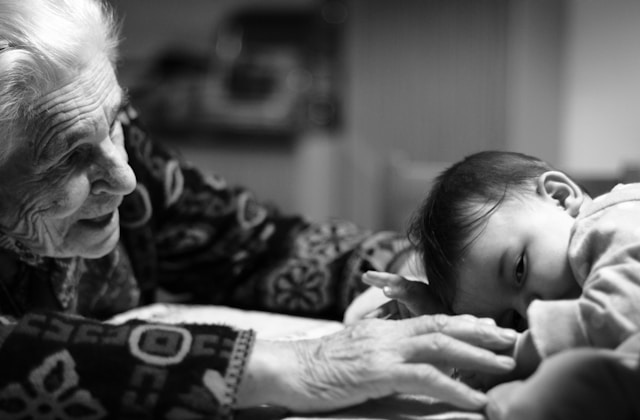
Ultimately, the value of the Nodes lies in the way they frame human development. They remind us that growth is rarely linear, never easy, and always relational. They show us that we carry both strengths and blind spots, and that becoming whole requires us to work with both.
There is no pressure to “become” one’s North Node in some moralistic sense. Life doesn’t work that way. But we can become more aware of the stories we repeat, the tendencies we rely on, and the kinds of people who open or close doors for us. That awareness, in itself, is a form of evolution.
The Nodes don’t define us. They reflect us—in motion, in process, in relationship. And in doing so, they help us see our lives as more than a collection of events. They help us see them as a path, a developing story, a process we are deeply engaged in.
What comes next
In a follow-up article, we’ll explore how you can identify your own nodal placements and begin to reflect on their specific meaning in your life. We’ll look at the Nodes in each of the twelve signs and houses, and how aspects from other planets shape their expression. Whether you're new to astrology or deeply immersed in it, understanding your own nodal axis can be a powerful step toward more intentional living.
Other articles in this series:
The Nodes of the Moon – a psychological and symbolic view, The Moon Nodes and creative freedom, The Nodes of the Moon in the twelve houses, Aspects of planets to the Nodes of the Moon, How to find the Nodes in your birth chart, North Node in Aries, North Node in Taurus, North Node in Gemini, North Node in Cancer, North Node in Leo, North Node in Virgo, North Node in Libra, North Node in Scorpio, North Node in Sagittarius, North Node in Capricorn, North Node in Aquarius, North Node in Pisces
Two images that illustrate the astronomical reality of the Moon's Nodes.
Other articles in this series:
The Nodes of the Moon: A psychological and symbolic overview, The Nodes of the Moon and creative freedom, The lunar Nodes: an alternative look at growth, relationships and multiple livesThe lunar Nodes: an alternative look at growth, relationships and multiple lives, The Nodes of the Moon in the twelve houses, Aspects of planets to the Nodes of the Moon, Transits of the Lunar Nodes and life-changing events, How to find the Nodes of the Moon in the birth chart, North Node in Aries, North Node in Taurus, North Node in Gemini, North Node in Cancer, North Node in Leo, North Node in Virgo, North Node in Libra, North Node in Scorpio, North Node in Sagittarius, North Node in Capricorn, North Node in Aquarius, North Node in Pisces